Hard water is one of those household problems that rarely announces itself all at once. Instead, it leaves clues. A cloudy glass after washing, stiff towels, dry-feeling skin, or a white ring around the bathroom faucet can all point toward minerals in the water. Over time, these small annoyances may become expensive maintenance issues, especially when plumbing fixtures and appliances begin collecting deposits.
Many homeowners looking for a simpler alternative to traditional softening systems eventually explore salt-free water conditioning. These systems are often promoted as a low-maintenance way to reduce the effects of hardness without adding salt to the water. But how do they work, and are they suitable for every home? Understanding the basics can help you make a more informed decision.
What Makes Water Hard?
Water hardness mainly comes from naturally occurring calcium and magnesium. As groundwater moves through soil and rock, it can dissolve minerals and carry them into wells and municipal water supplies. The amount varies by region, which is why some homes experience severe hardness while others barely notice it.
Hard water is not automatically unsafe to drink. In fact, calcium and magnesium are naturally occurring minerals. The concern is usually related to household performance rather than immediate health effects. Hard water can interfere with soap, leave spots on dishes, and create deposits inside water heaters, pipes, and appliances.
The problem becomes more noticeable when water is heated. As temperature rises, dissolved minerals can separate from the water and settle onto surfaces. This is one reason showerheads, kettles, coffee machines, and water heaters often show signs of mineral accumulation first.
Understanding Hard Water Minerals
The main hard water minerals responsible for these issues are calcium and magnesium. When they interact with soap, they can create a sticky residue commonly called soap scum. This residue may appear on shower walls, bathtubs, sinks, and even freshly washed skin.
Hardness can also affect laundry. Detergents may not work as efficiently, and clothes can feel rough or look dull after repeated washing. Towels, in particular, may lose their softness. If you’ve ever washed a towel that somehow feels less comfortable than before, hard water could be part of the explanation.
Kitchen appliances can suffer, too. Coffee makers, dishwashers, and electric kettles often heat water repeatedly, giving minerals more opportunities to settle. Without regular cleaning, deposits can affect performance and shorten the useful life of equipment.
The severity depends on the hardness level, water temperature, usage, and the type of appliance. A water test is the best way to determine whether hardness is mild, moderate, or high.
What Is Scale Buildup?
One of the most visible effects of hard water is scale buildup. Scale is a crusty deposit that forms when dissolved minerals come out of the water and attach to surfaces. It may appear white, gray, or slightly yellow, depending on the water chemistry and other substances present.
Common locations include faucet aerators, showerheads, water heaters, washing machine connections, and the inside of pipes. In bathrooms, scale can make fixtures look permanently dirty even after cleaning. In appliances, it may reduce heating efficiency and restrict water flow.
Water heaters are especially vulnerable because minerals can settle at the bottom of the tank or coat heating elements. This may force the equipment to work harder, increasing energy use and creating additional wear. In tankless systems, scale can interfere with heat exchangers and water pathways.
Regular descaling can help, but cleaning only addresses the deposits already present. If hard water continues entering the home, the problem will likely return.
How Salt-Free Water Conditioning Works
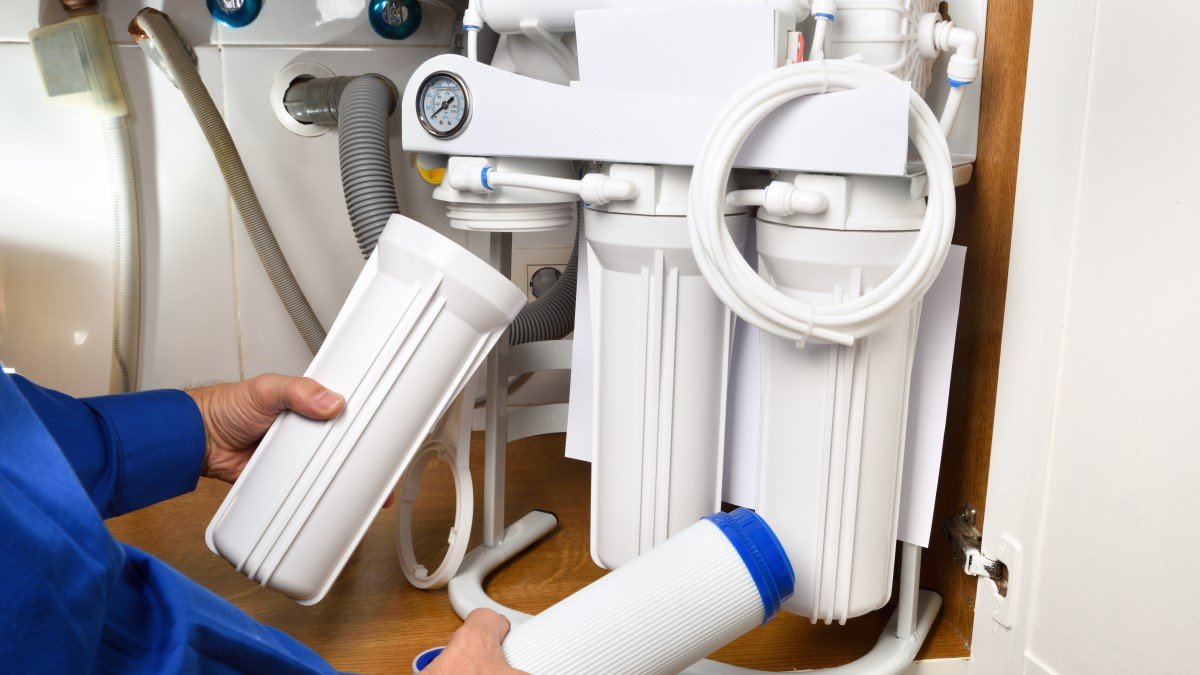
Salt-free conditioners generally do not remove calcium and magnesium from water in the same way a traditional salt-based softener does. Instead, many use a process called template-assisted crystallization, or TAC. The technology encourages hardness minerals to form microscopic crystals that remain suspended in the water rather than attaching easily to plumbing surfaces.
The goal is to reduce the ability of minerals to create hard scale. The minerals remain in the water, but they may be less likely to form the stubborn deposits associated with untreated hardness.
This distinction is important. A salt-free conditioner is usually considered a scale-control device, not a conventional water softener. It does not necessarily produce the same slippery water feel associated with softened water, and it does not remove hardness minerals from the supply.
For homeowners who want to reduce scale without using salt, electricity, or frequent regeneration cycles, this approach can be appealing. Many systems require relatively little maintenance beyond replacing or servicing the media according to the manufacturer’s instructions.
Benefits of a Salt-Free Approach
Salt-free conditioning offers several potential advantages. First, it does not require bags of salt, which can be inconvenient to store and carry. There is also no traditional regeneration cycle that sends concentrated brine into a drain.
Because these systems generally do not remove hardness minerals, they may be a practical choice for homeowners who want to preserve the mineral content of their water while reducing scale-related concerns. They can also be attractive for households seeking a system with simple operation and fewer moving parts.
Another benefit is that salt-free systems typically do not require the same amount of ongoing attention as traditional softeners. Depending on the model, homeowners may not need to monitor salt levels or schedule regular regeneration settings.
Still, performance varies. Not every salt-free product works equally well, and results can depend on water chemistry, flow rate, temperature, and the level of hardness. A product should be selected based on testing and documented performance rather than broad advertising claims.
Salt-Free Conditioner or Traditional Softener?
The choice depends on what you want the system to accomplish.
A traditional salt-based softener actually reduces calcium and magnesium through ion exchange. This can improve soap performance, reduce hardness-related residue, and change the feel of the water. It is often suitable for homes with significant hardness and a strong desire for softened water throughout the property.
A salt-free conditioner focuses mainly on scale prevention. It may help protect plumbing and appliances from certain deposits, but it does not remove hardness. If your primary concern is scale on fixtures and water-heating equipment, conditioning may be worth considering. If you want lower hardness levels or a different water feel, a conventional softener may be more appropriate.
In some situations, filtration and conditioning can also be combined. For example, a sediment filter may protect the conditioning media, while a carbon filter can address chlorine, taste, or odor concerns.
Consider Testing and Maintenance
Before purchasing any equipment, have the water tested. Hardness is only one part of the picture. Sediment, iron, manganese, chlorine, pH, and other factors can affect system performance and determine whether pre-treatment is necessary.
Ask the installer about expected scale reduction, operating limits, replacement schedules, warranty coverage, and service requirements. It is also helpful to confirm whether the system has been independently tested for the claims being made.
Even low-maintenance equipment needs attention. Filters may require replacement, media may have a service life, and plumbing connections should be inspected for leaks. A system that is ignored for years may not perform as expected.
A Smarter Way to Manage Hard Water
Hard water may be a common household issue, but the right solution depends on the actual water conditions and the problems you are experiencing. Salt-free conditioning can offer a convenient approach to scale control, particularly for homeowners who prefer to avoid salt and regeneration cycles. However, it should not be confused with a system that removes hardness minerals.
Start with testing, understand the difference between conditioning and softening, and choose equipment based on realistic expectations. When properly selected and maintained, a water treatment system can help reduce cleaning frustrations, protect appliances, and make everyday household care a little easier.
Sometimes, the best home improvement is the one that quietly prevents problems before they become expensive. Water conditioning may not be the most visible upgrade, but its value can show up in cleaner fixtures, better appliance performance, and fewer hard-water headaches over time.